Open wells don’t make safe drinking water, but they can make a pretty picture! I’m lucky enough to live near a tap where I can easily fetch my water, but many people in The Gambia still find access to safe drinking water to be a challenge. Nearly 22 percent of households use unprotected wells like this one for drinking, according to UNICEF. Luckily, my neighbors in this compound and many other people in my village know open wells are unsafe and opt to wait in lines at a covered hand pump or tap instead.

I decided to invite my new site mates who just so happen to be agriculture volunteers to help me. I also asked the four grade 10 students who attended Camp GLOW (Girls and Guys Leading Our World) if they would be interested in teaching the gardening skills they learned there. Luckily, everyone was on board and my school-garden training was born despite my lack of a green thumb!

While many Gambians opt for the two-piece complet, I personally prefer the African dresses because they are the breeziest in the heat. Traditional Gambian dresses are typically flowy and floor-length, and often have poofy, ruffled sleeves and flamboyant embroidery.

Health volunteers in The Gambia often paint murals in their communities to help teach various concepts, like good nutrition or proper hand washing. After painting the…

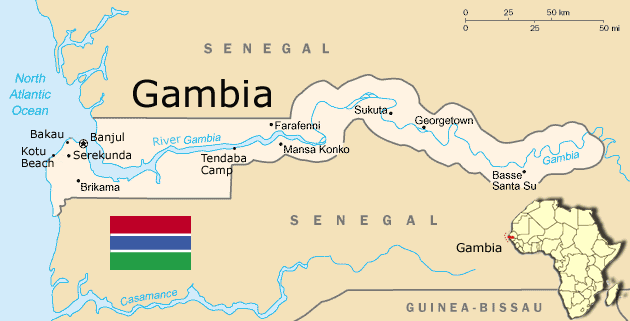
I am lucky enough to live in the Fonis with this group of people. We like to believe we are special because our region is known for better electricity than the city (sorry AgFos) and it’s not nearly as hot as upcountry. Our section of the river is even salty so we won’t be getting shisto anytime soon. Did I mention we are only a short gelly ride away from the city (no eight-hour travel days here!)? It’s great to live just a bike ride away from these lovely people so we can coordinate projects and take a break from village life together every now and then!

Every morning, I walk out to my back patio and look up at the mangoes dangling in the tree and am barely able to contain my excitement. You don’t know happiness until you bite into a perfectly-ripe mango, its hot juices dripping down to your elbows and staining your clothes.

I would that you can still recall the title of your favorite bedtime story, the one you begged your parents to read you night after night. Or maybe it’s storytime when you sat in a circle with your classmates that you remember best. Perhaps you have a memory of checking out a book with your first library card or staying up all night to finish a novel that was too good to put down. Reading is a big part of growing up for nearly every child in America. But in The Gambia, that is just not the case