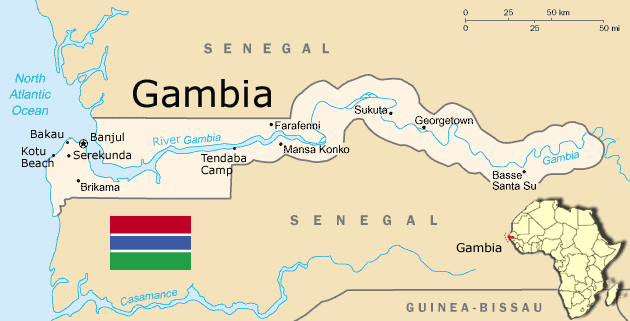
I don’t think the beauty of this place will ever wear off. In the midst of rainy season, everything here is green. Half the red sandy roads have vanished under wild green grasses. There’s cashew orchards and rice fields and groundnut plantations in perfect green rows. There’s green sprouts that will soon grow into watermelon with green rinds. There’s little green trees with green little limes, and bigger trees bearing oranges with green skin. And then there’s the tallest green trees in all the Gambia that tower over it all, a village just south of the river – Sibanor — my new home.

School starts at half past 8, but on the first day, students wandered in through the gates closer to 9. Not a single child brought paper or a pen. But at least they showed up, which is more than half the teachers can say. Fifteen teachers failed to report, and one came with her baby tied to her back.

As we dressed for the cultural show, my mother draped strings of beads around my neck and across my chest in a traditional Jola fashion. She stood back, looked at me and sucked her teeth. “Ahaaaaa,” she said. “Nice, nice! My toma will be first.”

I love all the Gambian breakfast porridges that my sisters typically cook for Sunday morning breakfast. Here’s a look at what the Jolas call “chorai” (pronounced with a long I). A more universal Gambian term for the dish is “Chorah gerte.”

Here’s my tally of random happenings that sum up my Peace Corps Pre-Service Training.

As a last hurrah in training, we walked a half marathon through The Gambia: around rice fields, near cashew orchards, in waist-deep boiling mud, across dry plains and through knee-deep grass. The “Marathon March” served as a perfect metaphor for our service.

The following is a profile on my host mother and Gambian namesake who cared for me during my two months of Peace Corps training. She not only welcomed me to her home, but folded me into her family — worrying and fussing over me as if I really was her daughter. She is quite the character and an inspiration for my service.