Every time I cook with my sisters, they ask: “Do you eat this in America?” Time after time, I stare into the pot: fish heads bobbing in a red sauce, green curd-like paste made from leaves off our tree, spaghetti with mayonnaise, rice with palm oil. “No,” I shake my head. One day, my sister Sainabou finally exclaimed, somewhat perplexed: “Well, what do you eat in The Gambia?” I promised to show them one day.

Since Day One, my sisters have been offering to arrange my marriage to a Gambian husband. With each new person I meet, it’s more of the same — a flood of questions about why I lack a husband and child. In a culture where family life plays such an integral role and people are expected to get married and have babies, Gambians don’t understand how a 25-year-old woman could not only be single, but also say she doesn’t want a husband. I’ve tried various tactics to deflect the interrogations and marriage proposals, many of which have been less than successful.


Despite some beliefs that my malaria meds caused me to hallucinate and cut off my hair, I am still loving the new do. It’s growing…

The neighbors called out and soon the little path outside my family’s compound was full of townspeople and buzzing with excitement as everyone searched for the moon. Through the pink clouds in the evening sky, a faint hairline of the moon shone through, a sign that the month of fasting could finally end.

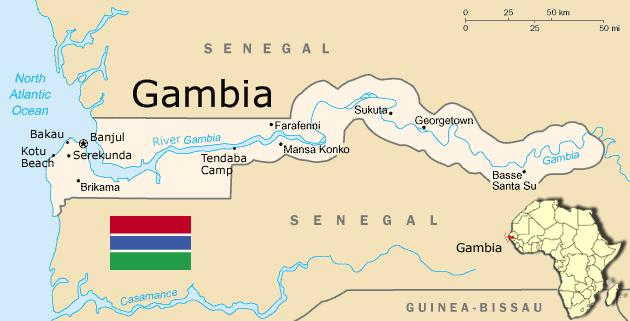
For my first 10 weeks in The Gambia, I am in Pre-Service Training while I learn one of the local languages, technical job skills and how to integrate into the culture. My training “village” however, is not much of a village. I live in Soma, one of the country’s transit hubs and home to about 10,000 people. Most of my days are spent in the town’s Jola neighborhood.

Every day, I pump from a nearby well to water a garden my training group planted down the road.